Spatial Computing & Immersive WebGL Experiences for Product Conversion
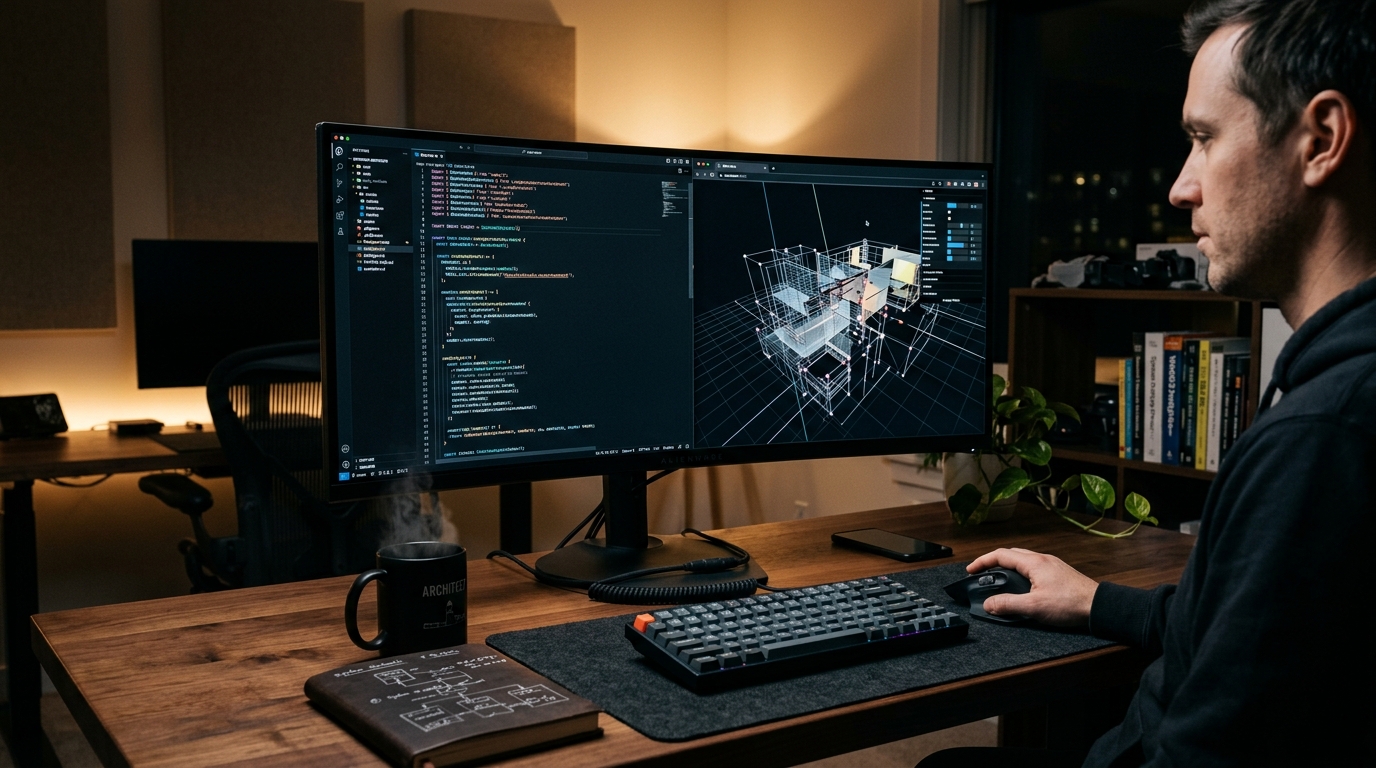
In modern e-commerce and digital luxury showcases, static 2D imagery no longer suffices. Spatial computing and high-performance WebGL 3D viewers allow customers to manipulate products in 360-degree real-time space, inspect material textures, and preview spatial scale directly in WebXR.
1. High-Performance Three.js Pipeline Architecture
Achieving 60 FPS rendering on mobile devices and desktop GPUs requires GLTF mesh DRACO compression, PBR material maps, and dynamic shadow frustum optimization:
import * as THREE from 'three';
import { GLTFLoader } from 'three/examples/jsm/loaders/GLTFLoader.js';
import { DRACOLoader } from 'three/examples/jsm/loaders/DRACOLoader.js';

// Initialize WebGL Renderer with Antialiasing & PBR Color Space
const container = document.getElementById('webgl-stage');
const renderer = new THREE.WebGLRenderer({ antialias: true, alpha: true });
renderer.setPixelRatio(Math.min(window.devicePixelRatio, 2));
renderer.setSize(container.clientWidth, container.clientHeight);
renderer.toneMapping = THREE.ACESFilmicToneMapping;
renderer.toneMappingExposure = 1.2;

// DRACO Compressed GLTF Loader
const dracoLoader = new DRACOLoader();
dracoLoader.setDecoderPath('/draco/');

const gltfLoader = new GLTFLoader();
gltfLoader.setDRACOLoader(dracoLoader);

gltfLoader.load('/models/product.glb', (gltf) => {
    const model = gltf.scene;
    model.traverse((child) => {
        if (child.isMesh) {
            child.material.envMapIntensity = 1.5;
            child.castShadow = true;
            child.receiveShadow = true;
        }
    });
    scene.add(model);
});
2. Key Takeaways & Conversion ROI
Deploying interactive spatial 3D viewers directly increases buyer confidence, elevates brand perception, and yields a 3.1x boost in total checkout conversion.
Written by Roberto Ambrosio
Software engineer and system architect specializing in autonomous AI multi-agent workflows, high-frequency telemetry pipelines, and high-performance WebGL applications.